
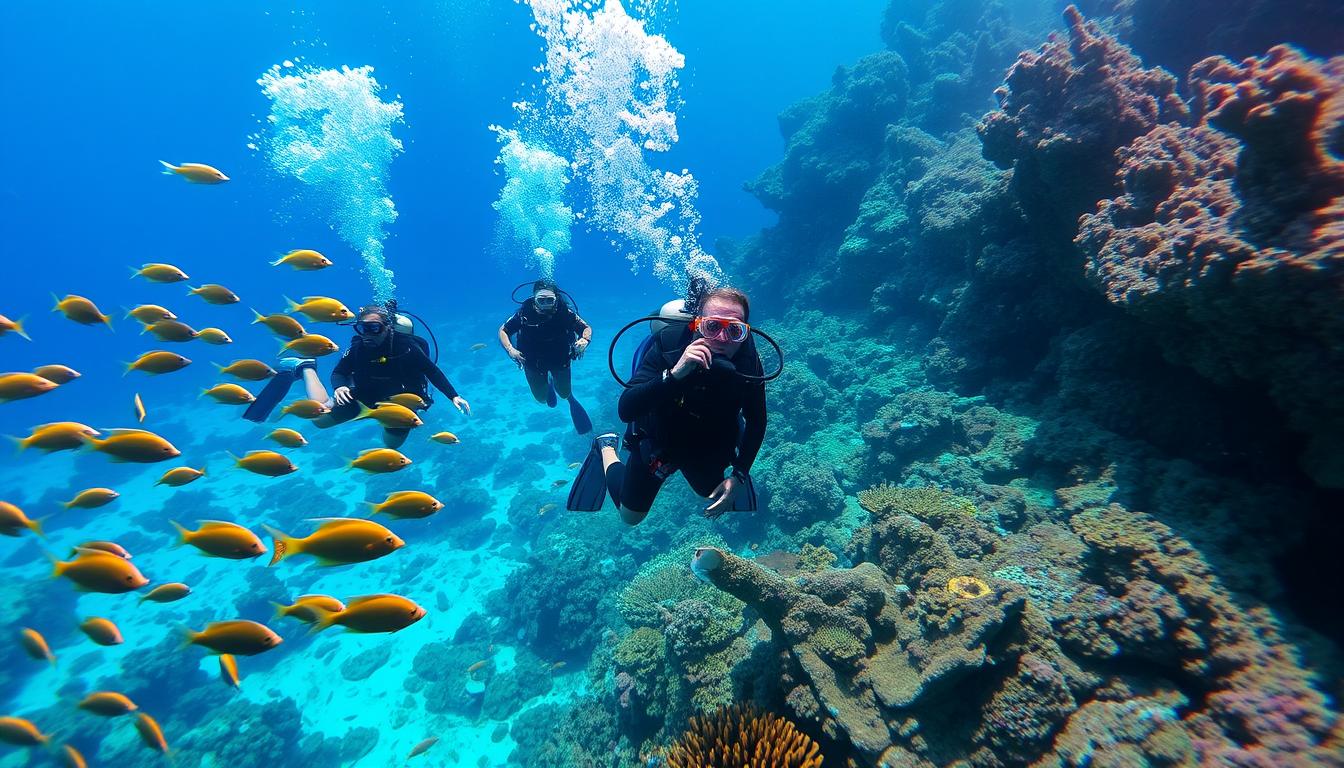
Dive into a world where adventure meets conservation. Our dive trips are special. They mix fun underwater exploration with helping our oceans. You can be new or skilled in diving. These trips will open your eyes. You’ll see beautiful marine life and help save it.
Key Takeaways
- Engage in meaningful eco-friendly scuba diving vacations.
- Discover stunning underwater vistas while conserving marine life.
- Suitable for both beginner and experienced divers passionate about ocean health.
- Contribute to the protection and preservation of marine ecosystems.
- Learn about marine conservation through hands-on experiences.
- Form part of a global community committed to sustainable marine tourism.
Why Choose Marine Conservation Dive Trips?
Marine conservation dive trips are more than just fun underwater. They have a big, important goal. When divers join these trips, they help the ocean stay healthy. These trips are made to have a big, good impact, helping save the ocean.
Purposeful Diving Adventures
Each dive has a special goal for saving the ocean. You might help fix coral reefs or control harmful sea creatures. It’s all about making a lasting positive difference in the ocean.
Supporting Ocean Health
These trips also help scientists learn about the ocean. Divers collect information about sea life, water, and places under the sea. This information is key for studies that aim to protect our oceans.
Top Destinations for Marine Conservation Dive Trips
Embark on a journey to protect marine areas. See amazing biodiversity and help conserve it. Dive into three special places for the best experiences in saving marine life.
Belize Barrier Reef
The Belize Barrier Reef has beautiful corals and many sea creatures. It’s part of the world’s second-largest coral reef. Here, divers help save this important underwater world for the future.
Great Barrier Reef, Australia
The Great Barrier Reef in Australia is a top spot for marine conservation. It’s home to thousands of fish and coral types. Divers help with reef recovery, protecting marine life. Learn more about diving destinations for marine life and the Great Barrier Reef’s magic.
Madagascar Marine Reserves
Madagascar’s reserves are great for exploring and helping turtles. The underwater world and conservation work make it perfect for divers who love the ocean. Here, divers actively help save marine creatures.
From Belize to Madagascar, these places offer amazing dives and a chance to help ocean life. They show how fun diving can link to important environmental work.
Eco-Friendly Dive Excursions: What to Expect
When you go on eco-friendly dive excursions, you find both adventure and a chance to help the ocean. You get to do things that help sea life and keep our oceans full of life.
Hands-On Conservation Projects
Underwater eco-tourism lets you join in on saving the ocean. You can help fix broken coral reefs. This work is fun and super important for sea habitats.
Invasive Species Control
Another key task is stopping invasive species. Like dealing with lionfish that harm local fish. Helping out balances the ocean’s life, making it healthier.
Marine Species Surveys
Marine surveys are a big part of these dives. Divers note local sea creatures and their health. This info guides science and helps keep the sea safe.
| Activity | Purpose | Impact |
|---|---|---|
| Coral Transplantation | Restore damaged reefs | Enhances habitat complexity and biodiversity |
| Invasive Species Control | Manage non-native species population | Protects native species and maintains ecological balance |
| Marine Species Surveys | Collect data on local marine life | Informs conservation strategies and scientific research |
How to Get Involved in Sustainable Marine Tourism
Start by picking dive operators who care about the ocean. They should help with local conservation efforts. Make sure they work to protect marine life. These operators take part in conservation programs and get their clients involved too.
Think about learning more on marine conservation. These programs teach about ocean life and why we must save it. They show the effects of diving on marine creatures. This makes divers more mindful and eco-friendly.
Other ways to get involved:
- Participate in beach clean-ups to reduce litter and pollution.
- Join coral reef monitoring projects to help assess the health of reef ecosystems.
- Choose diving destinations where sustainable practices are enforced and tourism actively contributes to environmental conservation.
By doing these things, divers help our oceans stay healthy. They enjoy great eco-conscious diving adventures. Dive operators, conservation efforts, and green spots make these experiences good for the planet.
The Role of Eco-Conscious Diving Adventures
Eco-friendly dive excursions are more than just fun underwater. They teach us how to care for the ocean. These trips share important info about the sea and how we affect it.
Minimizing Environmental Impact
These dives aim to protect the ocean. Divers learn to lessen harm to reefs and sea life. They follow rules to safeguard underwater habitats.
They also use gear that’s safe for the ocean. This helps keep marine life unharmed.
Education and Awareness
Learning is key on these dive trips. Divers find out about sea life and the need to keep it healthy. Programs offer workshops and activities like cleaning reefs.
Groups running these trips work with experts. They make sure divers know how to protect the sea. Divers come back ready to help save our oceans.
| Aspect | Eco-Friendly Dive Excursions | Marine Conservation Dive Trips |
|---|---|---|
| Primary Goal | Minimizing Environmental Impact | Education and Awareness |
| Main Activities | Using eco-friendly gear, avoiding contact with marine life | Species surveys, reef clean-ups |
| Key Participants | Divers, Environmental Enthusiasts | Divers, Marine Biologists |
Diving in Marine Protected Areas: A Unique Experience
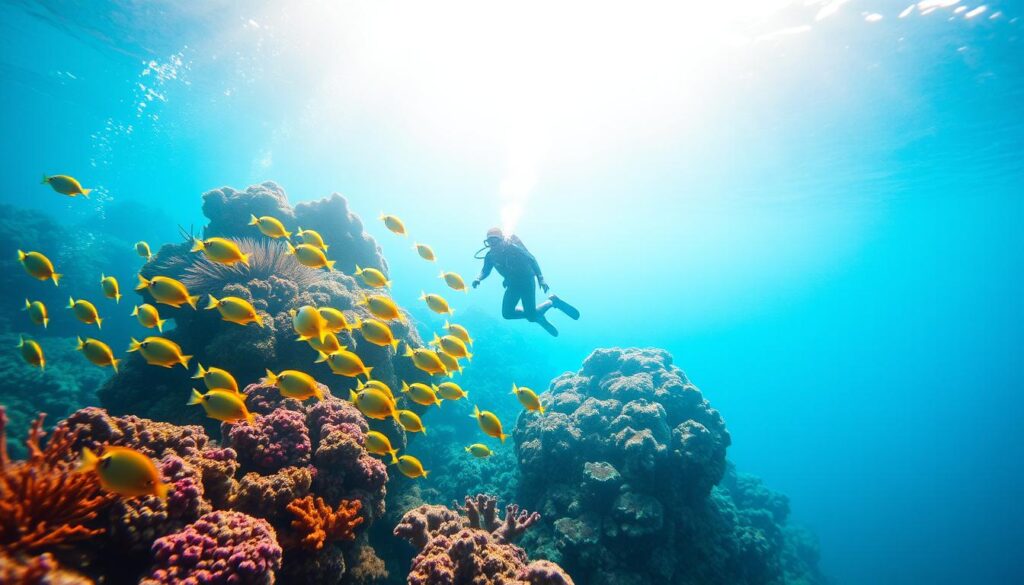
Diving in marine protected areas is an amazing adventure. These places help protect ocean life. Divers get to see beautiful and unharmed marine environments.
Exclusive Access to Protected Sites
Diving here means you get to visit special spots. These spots are usually not open to everyone. This lets divers see untouched ocean areas full of life.
Guided by Expert Marine Biologists
Dive trips here are often led by marine biologists. These scientists teach divers about the sea life and how to protect it. Trips with them turn diving into learning about the ocean.
By diving responsibly, you help save the ocean. This way, everyone can enjoy these beautiful places later. It keeps the ocean safe for all living things.
Preparing for Your Marine Conservation Dive Trip
Ready for a dive trip? It’s important to plan well. This keeps you safe and helps the ocean. Let’s get you set for sustainable diving adventures.
Essential Gear and Certifications
Having the right gear is key. Choose gear that’s good for the ocean, like reef-safe sunscreen. You also need the right dive certifications. Look for courses that teach about protecting the sea.
Travel and Accommodation Tips
Staying in green places matters a lot. Find spots that use clean energy and less plastic. Also, buying from local shops that care about the ocean is a great move. This helps you dive in a way that’s good for the planet.
- Pack environmentally friendly dive gear
- Get certified with a conservation focus
- Choose eco-conscious accommodations
- Support local green businesses
Joining the Global Community of Ocean Conservationists
When you join marine conservation dive trips, you become part of a big team. This team works hard to keep our oceans safe and healthy. It includes divers, scientists, activists, and locals from everywhere.
By joining, you help important ocean projects. Everyone works together. Your skills and ideas can make a big difference. Projects like reef repair and animal counts help the sea a lot.
These trips do more than help the ocean. They also help you grow and learn. You get to learn a lot about the sea. And you help spread the word on how to protect it. Diving becomes a way to save the ocean for everyone tomorrow.
| Key Participants | Roles |
|---|---|
| Divers | Engage in hands-on conservation projects |
| Marine Biologists | Lead scientific research and provide expertise |
| Environmental Activists | Advocate for policy changes and public awareness |
| Local Communities | Support sustainable practices and eco-tourism |
Dive trips for ocean conservation make your diving even better. You also really help our oceans. You become a big part of saving our blue planet.
Conclusion
Marine conservation dive trips are more than just fun. They help protect our oceans’ rich life. Divers get to see beautiful underwater worlds and help keep them safe. By diving, they support the fight to save our seas.
By joining, divers become part of a worldwide group that cares about the ocean. Places like Belize, Australia’s Great Barrier Reef, and Madagascar need their help. Divers work on important tasks to keep the ocean healthy.
Going on a marine conservation dive trip is a way to help our oceans. Adding this to your travels helps protect sea life for others to see in the future. Be a friend to the ocean on your diving trips.