
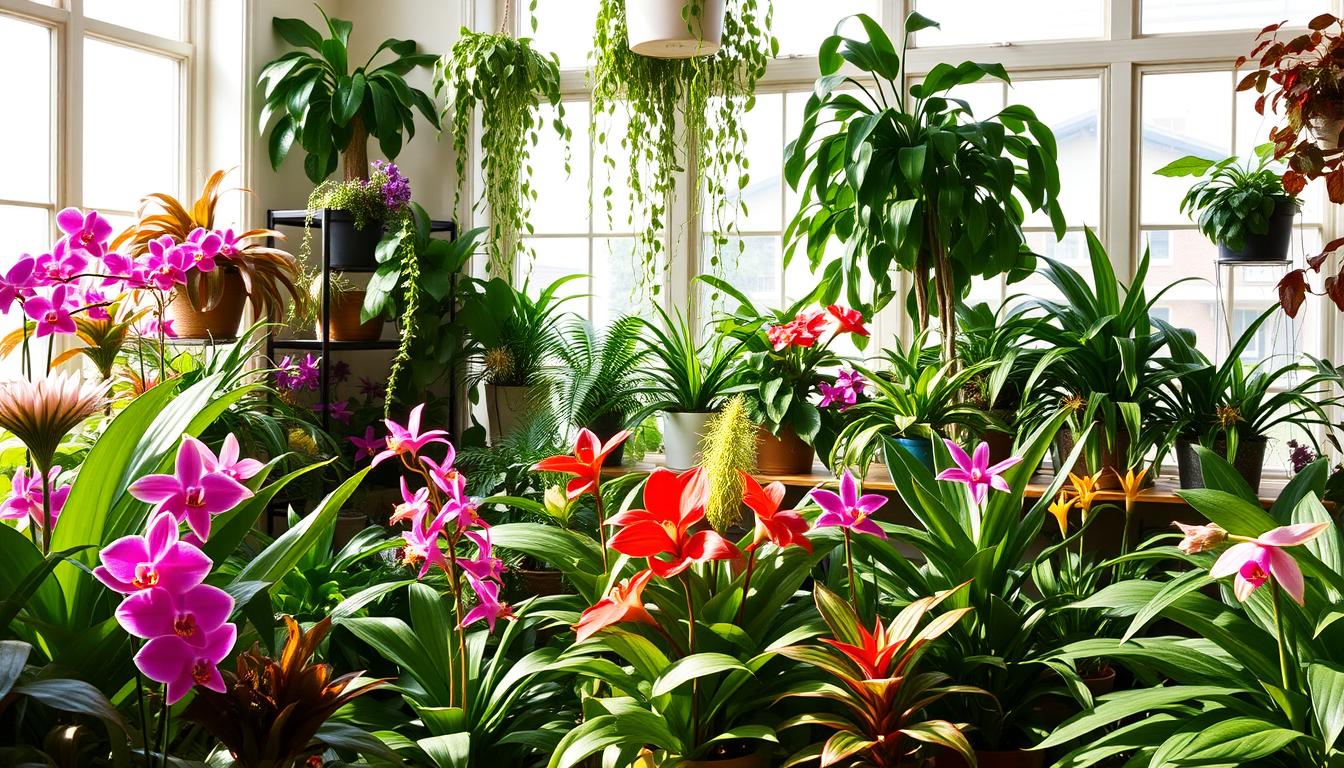
Indoor flowering houseplants can make any area look bright and welcoming. They bring color and beauty into our homes. These plants help reduce stress and clean the air too. This guide will teach you how to pick, take care of, and enjoy indoor flowering houseplants. By using this guide, your home will stay a beautiful place filled with flowers all year.
Key Takeaways
- Indoor flowering houseplants enhance both the aesthetics and atmosphere of your home.
- These plants offer mental health benefits and can improve air quality.
- Selecting the right plants involves considering lighting, space, and climate adaptability.
- Keeping your plants blooming requires proper watering, lighting, and fertilization.
- Discover easy-care plant options like African Violets, Peace Lilies, and Anthuriums.
Benefits of Indoor Flowering Houseplants
Indoor flowering houseplants make your home look pretty. They also help your health a lot. They make you feel happier, clean the air, and make your home nicer.
Mental Health Benefits
African violets and peace lilies make you feel less stressed. They help your mind relax. People with depression or anxiety find gardening with these plants helpful. Best indoor flowering plants make your home a calm place.
Air Purifying Qualities
Plants like areca palms and rubber plants clean the air. They get rid of bad stuff you can’t see. Having these plants means you breathe cleaner air. This is good for your lungs. Taking care of these plants keeps your air fresh.
Enhancing Your Home’s Aesthetics
Your home looks better with plants like anthuriums and orchids. They add bright colors and fun shapes. This makes your home inviting. Taking care of these plants keeps them looking great. They make your home a happier place to be.
Choosing the Right Indoor Flowering Houseplants
When picking indoor flowers, think about light, space, and weather fit. These factors help your flowers bloom well inside.
Lighting Conditions
Different flowers need different light. African violets and oxalis like it bright. Peace lilies can handle less light. Jasmine and flower maples need a lot of sun. Put your plants where they get the right light.
Space Considerations
Think about how much room your flowers will need. Peace lilies and flowering maples get big. African violets and gloxinia stay small. Make sure there’s enough space for them to grow.
Climate Adaptability
Plants need the right weather inside too. Jasmine and bromeliads like it warm and humid. The Christmas cactus prefers it cooler and drier. Make sure your home suits your plant’s needs.
Here’s a list of some popular indoor flowers:
| Plant | Light Conditions | Temperature Range | Watering Needs | Mature Size |
|---|---|---|---|---|
| African Violets | Medium to Bright | 65-75°F | Evenly Moist | To 8 inches tall and 16 inches wide |
| Oxalis | Medium to Bright | 60-75°F | Evenly Moist | To 12 inches tall and wide |
| Peace Lily | Low to Bright | 60-85°F | Evenly Moist | To 3 feet tall and wide |
| Jasmine | Bright to Intense | 60-75°F, 40-60°F in winter | Evenly Moist | To 4 feet tall and 6 feet wide |
| Bromeliads | Bright | 65-80°F, 60-65°F in winter | Moderately Dry | To 3 feet tall and wide |
Top Easy-Care Indoor Flowering Houseplants
Some indoor plants are easy to take care of and look beautiful all year. This guide will talk about a few great choices. They are perfect for beginners and plant lovers alike.
African Violets
African Violets are very popular. They have bright flowers and soft leaves. They like warm places with a little light.
They don’t need much work to grow. African Violets can flower many times a year. They make your room colorful.
Peace Lilies
Peace Lilies have pretty white flowers and dark green leaves. They can grow in light or dark places. Just water them regularly.
They’re great for anyone’s easy-care plant guide.
Anthuriums
Anthuriums have heart-shaped flowers and shiny leaves. They are perfect if you want to grow colorful plants. They need some light and water to do well.
Anthuriums make any room look better.
How to Keep Your Indoor Flowering Houseplants Blooming
To keep your indoor flowers looking great, focus on three things: watering, light, and food. Stick to these care tips, and you’ll see beautiful flowers for a long time.
Watering Tips
Getting the water right is key for happy, blooming houseplants. Each plant needs a different amount of water. But most like their soil moist and well-drained. Too much water can hurt the roots. Too little can stop flowers from growing. It’s best to water when the soil’s top inch is dry.
Optimal Lighting
Lighting is super important for your plants. Different plants need different amounts of light. For example, lipstick plants need some shade, but African violets do best in bright, indirect light. Put your plants where they’ll get just the right amount of light. This helps them grow well and bloom.
Fertilizing Schedule
Fertilizing regularly is a must for flowering houseplants. Feed them with a good fertilizer every two weeks in spring and summer. This is when they grow the most. In fall and winter, cut back on the food. This prevents too much nutrient build-up and keeps your plants healthy.
Indoor Flowering Plant Varieties for Different Seasons
Make your living space beautiful all year by picking indoor flowering plants for each season. These plants bring color and scent to your home, from cold winter days to warm summer nights. By knowing what each plant needs, you can keep your flowering plants happy all year.
Winter Bloomers
Winter might seem dull, but it’s great for poinsettias and Christmas cacti. They do well in the cold, adding festive cheer to your space. Give them light but not direct sun, and keep their soil moist but drained.
Spring Favorites
When it gets warmer, add geraniums and roses inside. They love more daylight and mild warmth. Put them somewhere bright and water them often to help them bloom.
Summer Beauty
Hydrangeas and ixoras are perfect for summer. They thrive with more sun and heat. They need lots of humidity and sunlight in the morning. Watering them regularly and airing them out helps them flower.
Autumn Highlights
As it cools down, chrysanthemums and lipstick plants start to shine. They like the cooler evenings and shorter days of fall. Keep them in bright, indirect light and water when the soil’s top starts to dry.
| Season | Indoor Flowering Varieties | Care Tips |
|---|---|---|
| Winter | Poinsettias, Christmas Cacti | Indirect sunlight, moist yet well-drained soil |
| Spring | Geraniums, Roses | Bright location, regular watering |
| Summer | Hydrangeas, Ixoras | Morning sunlight, consistent watering, plenty of humidity |
| Autumn | Chrysanthemums, Lipstick Plants | Bright, indirect light, water when topsoil is dry |
Common Issues and How to Fix Them
Keeping indoor flowering plants healthy means handling common problems that pop up. Knowing these problems and their fixes helps keep your plants in good shape. This makes sure they stay lively and beautiful.
Pests and Diseases
Dealing with pests and diseases is a big part of how to grow indoor flowering houseplants. Things like spider mites, aphids, and fungus gnats can damage your plants. Check your plants often. Use insecticidal soap or neem oil to fight off pests. Diseases like powdery mildew or root rot need you to keep air moving and not overwater your plants. These are important care tips for indoor flowering houseplants.
Overwatering vs. Underwatering
Watering your plants too much or too little can cause big problems. Too much water leads to root rot and fungus. Not enough water makes plants wilt and stress. To avoid this, water your plants when the soil’s top inch is dry. Make sure your pot has drainage holes to keep moisture just right.
Root Bound Plants
Some plants outgrow their pots, making it hard for them to get water and nutrients. Signs include wilting, slow growth, and yellow leaves. Moving them to a bigger pot every few years is key. This is crucial in how to grow indoor flowering houseplants right. It gives them the space they need to grow well.
Best Locations for Indoor Flowering Plants
Finding perfect spots in your home for indoor plants helps them grow. This guide will show you where to put your flowers. They will make your home look and feel better.
Living Room
The living room is a great space. It’s usually bright and has a lot of room. Here, plants like peace lilies and African violets can improve your air. They make the room feel more welcoming.
Bedroom
Add plants to your bedroom for a calm vibe. Orchids and jasmine smell nice and help you sleep better. These plants make your bedroom a relaxing place.
Kitchen
The kitchen is good for plants that like humidity. Bromeliads and mint look and smell great here. They enjoy the kitchen’s moisture and are useful for cooking.
Bathroom
Many plants love the bathroom’s humidity. Orchids do well with the warm, moist air. Just put them near a window that doesn’t get direct sunlight.
| Room | Ideal Plants | Benefits |
|---|---|---|
| Living Room | Peace Lilies, African Violets | Enhances decor, purifies air |
| Bedroom | Orchids, Jasmine | Creates calming atmosphere |
| Kitchen | Bromeliads, Mint | Thrives in humidity, adds freshness |
| Bathroom | Orchids | Flourishes in warm, moist conditions |
Care Tips for Indoor Flowering Houseplants
To keep your indoor plants vibrant and healthy, you need to care for them regularly. If you take care of them the right way, your plants will flourish all year. Let’s talk about how pruning, the right soil, and re-potting help your indoor flowering houseplants stay healthy.
Pruning Techniques
Pruning keeps your houseplants looking good and helps them grow. Cutting off dead or sick parts helps new parts grow and makes more flowers bloom. Use clean, sharp scissors or shears to avoid plant infections. Cut above a growth spot to make more branches grow.
Soil Requirements
The right soil is key for healthy, blooming indoor plants. Good soil stops roots from sitting in water and rotting. Choose soil with peat moss, perlite, and vermiculite. This mix lets air in and water flow well.
Re-potting Instructions
Re-potting gives your houseplants room to grow and stops roots from getting too tight. You should re-pot about once a year or when the plant gets too big for its pot. Here’s how to do it:
- Gently take the plant out of its old pot.
- Shake off the roots and trim any that are too long or wrapped around.
- Pick a slightly bigger new pot and put in some fresh soil.
- Put the plant in and add more soil, keeping it at the same level as before.
- Give the plant a good water to settle it into its new home.
Good care for indoor flowering plants includes regular pruning, the right soil, and re-potting when needed. These tips help you keep your indoor garden bright and healthy all year. Enjoy your beautiful indoor plants!
Shopping Tips for Indoor Flowering Houseplants
Looking to add new plants to your home? There are important things to think about. Here you’ll find tips on picking the best ones during your shopping trip.
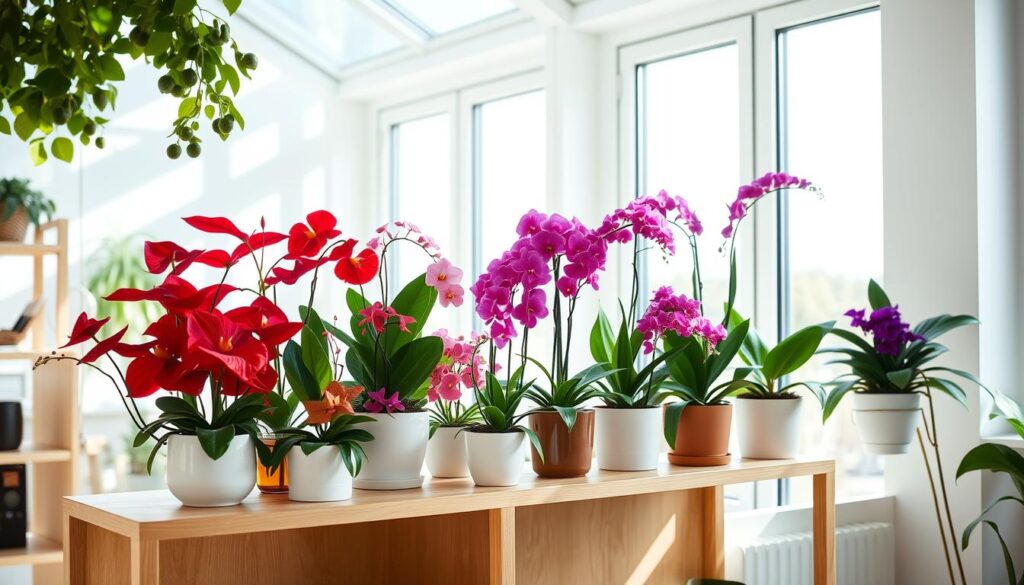
Inspecting for Pests
Before buying, check the plants closely for pests or diseases. Peek under the leaves for tiny bugs or webs. This step helps in how to grow indoor flowering houseplants without problems from the start.
Selecting Healthy Plants
Choose the best indoor flowering plants with bright leaves and buds. Skip those in full bloom. They might not last long. A good plant has white or light tan roots. They should smell fresh, not bad.
Choosing the Right Size
Think about where you’ll put your new plant. Make sure it will have enough room to grow. Pick one that’s the right size for your spot, big or small.
Using these tips will make shopping better. Knowing how to grow indoor flowering houseplants and picking the best indoor flowering plants leads to a happy indoor garden.
Indoor Flowering Houseplants Guide
Understanding how to grow and care for indoor flowering houseplants is key. This guide offers tips on growth conditions, blooming, and upkeep.
Understanding Growth Conditions
Every indoor plant needs certain things to grow well. Light, warmth, and water matter a lot. Plants like orchids and African violets need bright light but not direct sun, and they like the air a bit moist.
Tips for Encouraging Blooms
Getting your houseplants to flower involves a few steps. Give them enough light, water right, and feed them. A special light might help those that need more. Also, a good fertilizer is important during their growing times.
Long-Term Maintenance
Keeping your flowering plants healthy takes ongoing work. You need to cut off old flowers, repot bigger plants, and check for bugs. Doing so helps your plants stay beautiful all year.
Conclusion
This guide helps you understand the beauty and perks of indoor flowering plants. You will know how to choose the right plants for your place. Look at easy-care plants like African Violets and Peace Lilies for their simple needs and beauty.
To keep your plants happy, remember to water them right, give them enough light, and feed them on time. Dealing with pests and too much water helps them stay healthy. Putting plants in the right spot makes your home look and feel better.
This guide shows how to take good care of your indoor plants. Following these tips lets your plants grow well. They make your home beautiful and calm all year.