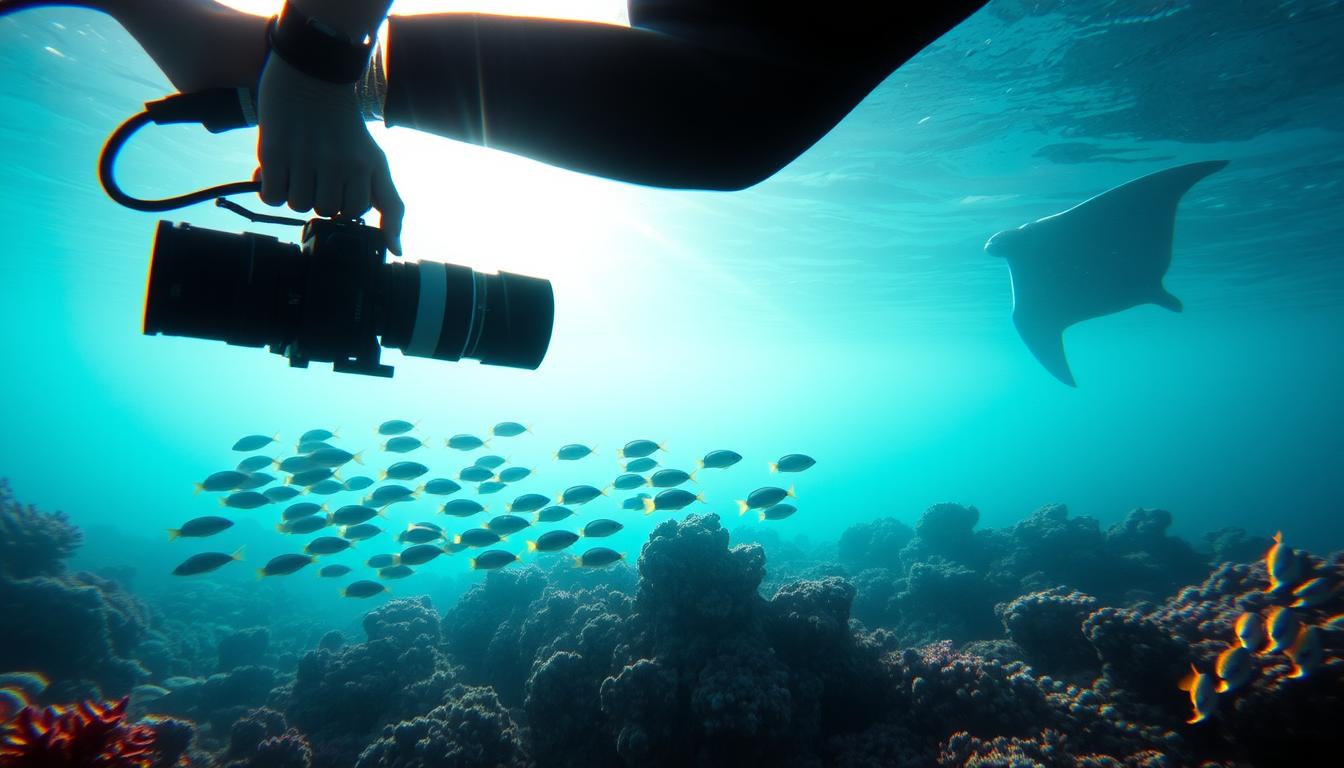
Diving into underwater photography opens up a beautiful world. It lets you keep the underwater magic forever. Whether it’s bright coral reefs or marine life that interest you, knowing the basics is key. This section introduces what you need for your underwater photography journey. It talks about must-have gear and simple techniques. All to help you start this exciting hobby.
Key Takeaways
- Discover the essentials of underwater photography basics.
- Learn about the necessary equipment to get started.
- Understand beginner-friendly shooting techniques.
- Find resources for improving your underwater photography skills.
- Start exploring the fascinating underwater world through your camera lens.
Introduction to Underwater Photography
Going into underwater photography is exciting and tough. With the right tips and some practice, anyone can take amazing photos under the sea. This part will give beginners the best tips for starting out in underwater photography.
Underwater photography shows a world you can’t see on land. There are bright colors, all kinds of fish, and dreamy scenes to capture. But, taking photos underwater can be hard because of things like low light and moving subjects.
It’s important to know these challenges when you start. Knowing what to expect will get you ready both in your mind and with your gear. It also keeps you excited without getting too upset by little problems.
Here are some tips to get better at underwater photography. First, make sure your camera gear is ready and working well. Learning how to change your camera settings under the water and knowing how light works in water will really help.
Second, being good at diving matters a lot. When you’re comfy and steady underwater, you can take better pictures. Practicing this makes your photos clearer and better looking.
Finally, it’s okay to make mistakes. Every time you dive, you learn something new. Write down what you learn, look at your photos, and see what works. Soon, you’ll get much better at taking stunning underwater photos.
Choosing Your Underwater Camera
Looking for the best beginner underwater camera is key for stepping into underwater photos. If you’re into shooting your snorkel fun or sea life, picking the right camera helps get amazing shots.
Compact Cameras vs. DSLRs
When choosing between compact cameras and DSLRs, think about your skill level and underwater photography needs. Compact cameras are simple to use, less expensive, and light. Great for starters. DSLRs have better image quality, more settings, and many lens options. They’re good for seasoned shooters.
Key Features to Look For
Look for waterproof rating, easy controls, and external light attachment in a beginner camera. The camera should handle the depths you dive. Easy controls let you focus on taking photos. And light attachments improve shots in dark water.
Top Recommendations for Beginners
A few cameras stand out for new underwater photographers. The Olympus Tough TG-6 is known for its durable design and great close-up shots. The Canon PowerShot G7 X Mark III mixes portability with high-quality images. It’s perfect for both land and sea. For a DSLR option, the Nikon D3500 with underwater housing is a top choice for crisp underwater photos.
Finding the best beginner underwater camera means balancing ease, quality, and depth features. This balance turns underwater adventures into beautifully captured memories.
Essential Underwater Camera Gear
When you dive into underwater photography, the right underwater camera gear is key. Each piece helps your gear last longer and your pictures look better.
Underwater Housing
Underwater housing protects your camera. These casings keep your gear safe from water. They also let you use important camera functions. Pick a housing with the right depth rating for your dives. Depth ratings range from about 130 feet to more than 300 feet.
External Strobes and Flashes
Lighting under water is tricky because light gets lost and colors change. External strobes and flashes are key for underwater camera gear. They bring back color and make marine life look bright. Brands like Sea & Sea and Ikelite have great choices for all photographers.
Lighting Options
Continuous lighting systems are also important for your gear. They give you steady light. This is perfect for videos or low-light photos. These systems let you adjust the light and show battery life. So, you always have enough light for your shots.
- Consider the best housing for your camera’s depth rating.
- Invest in reliable external strobes to enhance image quality.
- Explore continuous lighting options for versatile shooting conditions.
Mastering Underwater Camera Settings
Getting amazing underwater photos means you need to tweak your underwater camera settings. Let’s start with aperture. It controls how sharp your photo looks. A smaller aperture makes more of the picture look sharp. This is great for unclear waters.
Next, let’s talk about shutter speed. For underwater shots, use a fast shutter speed. This helps keep your photos sharp despite water movement. Aim for 1/125 second or quicker to avoid blurs. Also, adjusting your ISO is key. It changes how your camera handles light. Use low ISO for sunny days and high ISO for darker water.
Using macro modes is great for small sea creatures. It lets you get close without the water messing up your shot. For wider scenes, try auto settings first. But, controlling settings yourself often gives better pictures.
| Setting | Recommended Adjustments |
|---|---|
| Aperture | Smaller aperture (higher f-stop) for greater depth of field |
| Shutter Speed | Fast shutter speed (1/125s or faster) to reduce blur |
| ISO | Lower ISO in bright conditions, higher ISO in low light |
Last tip: Use extras like strobes and lights to brighten your photos. Put strobes at a 45-degree angle to keep your photos clear and colorful. With these underwater camera settings tips, you’ll capture stunning underwater moments.
Underwater Photography Techniques
Learning underwater photography starts with the basics. This lets you try more advanced skills later. You’ll learn about taking close-up and wide shots and fixing colors for better pictures under the sea.
Shooting Macro
Close-up photography underwater means paying attention to small things. Look at tiny sea life and the details on coral. Stay close to what you’re photographing to make it stand out. A steady hand is key. Using a close-up lens will make your photos even better.
Shooting Wide-Angle
Wide shots let you capture the sea’s vastness. To get these shots, be close to what you’re photographing. This makes the picture clearer and more colorful. Try to use sunlight and keep it behind you to avoid deep shadows. A wide lens captures big scenes, like coral reefs and fish, well.
Manual White Balance
Fixing colors, or white balance, is crucial underwater. It keeps colors looking real, even deep underwater. As you go deeper, adjust your camera to keep colors natural. Changing settings while diving improves your photos’ look and colors.
Creative Underwater Composition Techniques
Exploring creative ways to compose underwater photos can make them look better. A basic idea is the rule of thirds. This means you break your picture into nine parts and place important things along these lines or where they meet. This makes your photo more balanced and interesting than just putting the subject in the middle.
Another key technique is using leading lines. These lines pull the viewer’s eye toward the main subject. Look for natural lines like coral reefs or the ocean bottom to use in your photos. Also, using things like seaweed or rocks to frame your subject adds depth and background to your pictures.
It’s also important to think about your background when taking pictures. A busy or distracting background can take away from your main subject. Use tricks like changing your angle, zooming, or using a big aperture to blur the background. Trying different angles, like shooting up, can make your photos look more dramatic.
Be sure to give your subject enough space and keep all important parts in the picture. Also, it’s crucial that the eyes or rhinophores of creatures are clearly seen; this makes photos more engaging.
Cropping photos can also make them look better, but think about how it affects the size of the print. By getting good at these techniques, your underwater photography will look more interesting and tell better stories.
| Technique | Description |
|---|---|
| Rule of Thirds | Placing your subject along intersecting lines of imaginary gridlines. |
| Leading Lines | Using natural lines to guide the viewer’s eye to the main subject. |
| Framing | Incorporating natural elements to frame your subject and add depth. |
| Background Control | Minimizing distractions using aperture, angle, and zoom adjustments. |
| Avoiding Amputations | Ensuring no parts of the subject are cut off in the frame. |
| Focus on Eyes | Keeping the eyes or rhinophores of your subject in sharp focus. |
Understanding Underwater Lighting Techniques
When you dive into underwater photography, knowing underwater lighting techniques is key. Water soaks up light. This makes colors less bright and things harder to see. Photographers need to use smart lighting ways to make their photos vivid and clear.
Natural sunlight is an easy light source, best in shallow water. It makes things look beautiful and can create special effects. But, its strength and direction can change, which is tricky.
For light that you can control, use external strobes and video lights. Strobes give a quick, strong light. This is perfect for snapping quick-moving sea life and showing bright colors lost in the water.
On the other hand, video lights give light without stopping. This is good for photos and videos. They let you adjust the light anytime. They’re also great for dark places or during sunset dives.
Mixing these lighting ways can make your photos much better. Using natural light and tools like strobes and video lights together works best. This mix helps make the picture clear and the colors right.
| Lighting Source | Advantages | Best Used For |
|---|---|---|
| Natural Sunlight | Free, abundant in shallow waters, beautiful natural effect | Wide-angle shots, natural seascapes, snorkeling |
| External Strobes | Powerful, brief light bursts, enhance colors, freeze motion | Macro photography, fast-moving subjects |
| Video Lights | Continuous light, adjustable, versatile | Videography, night dives, dark environments |
Improving Your Dive Skills for Photography
Tips for diving photography are key for awesome underwater photos. Getting better at diving helps a lot with underwater photos. One big skill is controlling your buoyancy. This means you can stay still without making the water murky. That helps keep your photos clear.
It’s also key to move safely underwater with your camera. Moving carefully helps you stay calm. This way, you can take really good photos. Practice moving in different underwater places helps you get better.
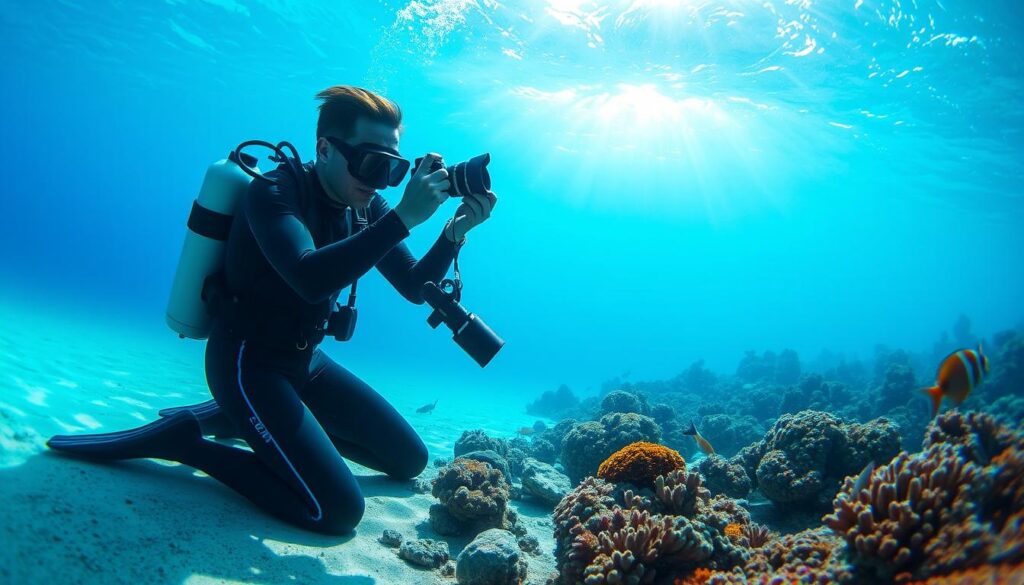
It’s important not to bother marine life too. Make sure you don’t change how sea animals act. Move slowly and gently. Keep a good distance from sea creatures. This is good for the sea and makes your photos more real.
- Buoyancy Control: Work on your buoyancy. It helps you stay still and not bother the underwater world.
- Safe Navigation: Get better at moving through the water safely with your camera.
- Minimize Disturbances: Be calm and respectful near marine life. This helps you take natural photos without stress.
Using these diving photography tips will make your underwater photos amazing. These tips help show how beautiful the underwater world is.
Taking Care of Your Underwater Photography Equipment
Keeping your underwater photography tools in top shape is key to make them last longer. Good care stops them from breaking and keeps them working well. Here, we’ll talk about how to get ready before a dive, take care of your gear after, and the best ways to store it.
Pre-Dive Preparations
Follow these steps before diving to prevent your equipment from failing:
- Inspect Seals: Check O-rings and seals before diving to make sure they’re all good and well-oiled.
- Check Battery Levels: Charge your camera and strobe batteries fully. It’s smart to have extras.
- Test Functionality: Make sure the camera, housing, and all parts work right.
- Adjust Camera Settings: Set up your camera’s white balance, ISO, and focus for the dive site’s conditions.
Post-Dive Maintenance
It’s important to clean your gear well after diving to keep saltwater from damaging it:
- Fresh Water Rinse: Rinse all your equipment right after diving, especially the camera housing.
- Drying: Let everything dry on its own in a cool, shaded spot to avoid watermarks and rust.
- Clean O-rings: Take O-rings out carefully, clean them, and put oil on them before putting them back.
- Inspect for Damage: Look for any signs of wear or damage to fix problems early.
Storage Tips
Storing your underwater photography gear correctly is important to keep it in good shape:
- Avoid Direct Sunlight: Keep your equipment in a cool, dry place to avoid damage from heat and UV light.
- Disassemble Components: Take the camera out of its housing and remove the batteries to prevent leaks.
- Use Moisture Absorbers: Put silica gel packets in your storage boxes to soak up any leftover moisture.
- Regular Checks: Look over your stored equipment from time to time for any damage or wear.
By sticking to these tips, you can have many great dives without worrying about your gear failing. Taking good care of your equipment is very important. It helps underwater photographers capture the sea’s beauty while making their gear last longer.
Respecting the Marine Environment
Underwater photography is more than just taking beautiful pictures. It’s about saving the ocean for others later. We need to be careful to keep the sea life safe.
When taking photos underwater, it’s important not to touch the ocean floor or animals. Even a small touch can hurt coral reefs and sea creatures. Avoid stirring up sediment because it can cover and harm the fish and plants.
To make a difference, follow some important rules when taking pictures under the sea:
- Keep a safe distance from sea life and their homes.
- Don’t use a flash when taking photos of sea animals.
- Do not chase sea animals. Wait for them to come to you.
- Always follow the rules for being in the water.
Using these tips, photographers can help keep the ocean beautiful and safe. This way, everyone can enjoy the wonders of the sea for a long time.
Underwater Photography Basics
Starting with underwater photography means learning key skills. Choosing the right camera is important for beginners. Look for features like water resistance and manual settings. These help a lot in taking beautiful photos underwater.
Learning basic photography tricks is also key. Try using manual white balance to deal with water light. And learn how to shoot close-ups and wide views. This helps in capturing all the beauty underwater.
Improving your diving skills is important too. Being able to stay still helps in taking good photos. Always dive safely to protect yourself and sea life. Good diving and photo skills let you explore underwater safely.
With these basics, you’re ready to capture the ocean’s wonders. Remember, keep practicing and be patient. This will help you take the best photos underwater.
Conclusion
We have started our journey into the exciting world of underwater photography. We’ve looked at the basics and how to pick your camera gear. You’ve also learned about camera settings and how to make your photos look great.
Choosing good equipment, like a camera or DSLR, is key to taking great underwater pictures. Knowing about all the gear, like underwater cases and lights, helps you get ready for any situation. Also, getting better at taking different kinds of shots and using manual white balance makes your photos better.
It’s important to keep getting better at diving to take good photos safely. Taking care of your gear is also key to making sure it works well and lasts a long time. Remember, it’s important to take photos without harming the ocean life.
Keep practicing and always be eager to learn more. This adventure in underwater photography helps you learn new things and love the ocean more. Happy shooting!