
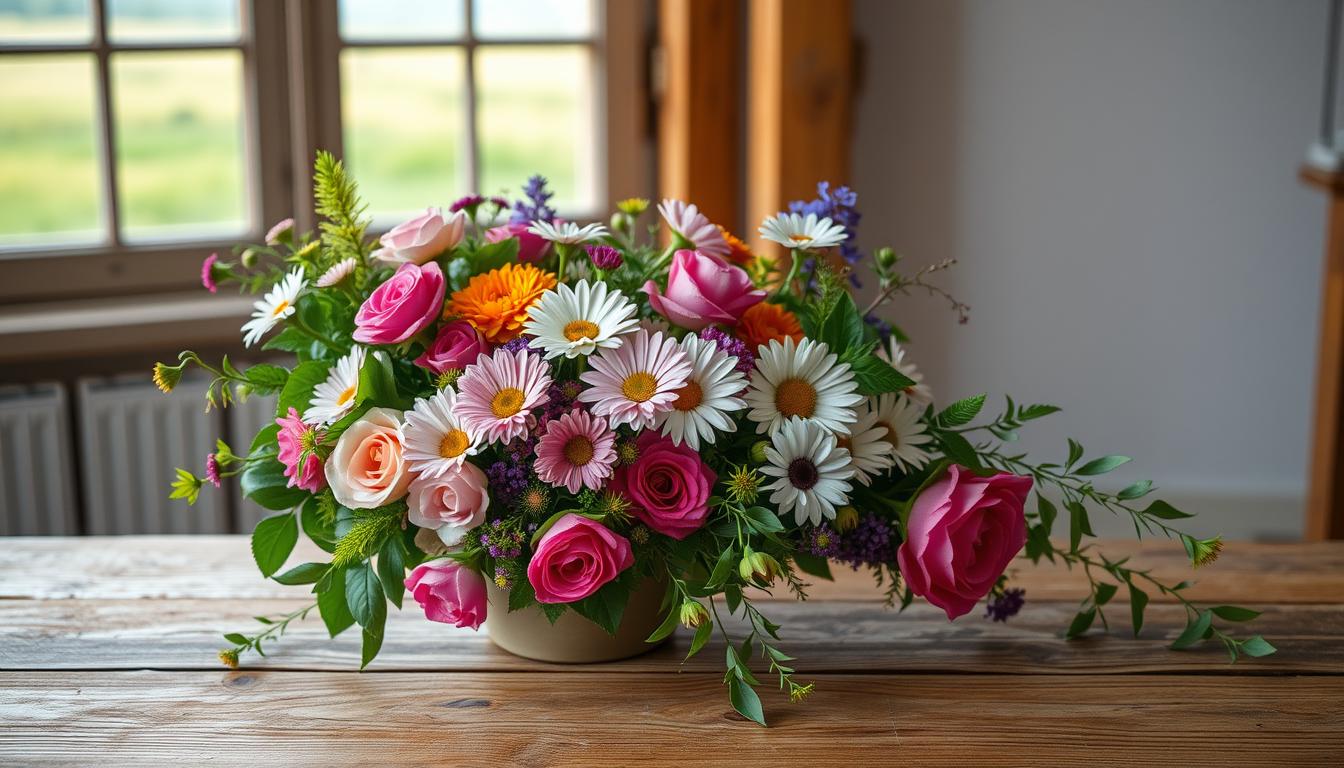
Starting with floral design can be exciting and calming. It’s perfect for making your place brighter. Or for getting ready for big events. Learning the basic flower arrangement tips is key. This guide gives flower arrangement tips for beginners. It talks about picking fresh flowers and the right tools. Also, it covers simple techniques to make any place look nicer. If you’re new to making flower arrangements, these tips will help. They will inspire you and help you make beautiful displays that everyone will love.
Key Takeaways
- Start with fresh, seasonal flowers for the best results.
- Select the right tools to ease the arranging process.
- Experiment with different arranging techniques to find your style.
- Understand the importance of choosing the appropriate vessel for your arrangement.
- Gain awareness of basic maintenance to prolong the life of your floral displays.
Finding Inspiration for Your Flower Arrangements
Finding the right inspiration is crucial for DIY floral designs. Looking at professional florists’ work helps a lot. They show you how to make beautiful bouquets and arrangements.
Looking to Professionals
Sarah from Hemlock & Hellebore shows off asymmetrical and bohemian styles. These can change how your home looks. By looking at their work, you learn how to make your designs better.
They mix colors, textures, and shapes in their designs. This teaches you a lot about floral art.
Utilizing Pinterest and Instagram
Pinterest and Instagram are full of creative floral designs. Use hashtags and boards to find many styles for any event. You can find simple to fancy ideas on these platforms. They help you learn and try DIY floral designs at home.
Choosing the Right Vessel
When starting with floral arranging, picking the right container is key. It not only makes your flowers look better. But it also makes arranging them simpler, keeping your project both pretty and sturdy.
Vase Options for Beginners
For beginners, it’s good to start with clear glass vases. You can see the stems, which helps check water levels and keep everything balanced. Cylinder vases and mason jars are great because they’re easy to use.
Considerations for Vessel Sizes
The size of the vase is important. Using vases with smaller openings helps hold flowers up. This means you don’t need extra tools to keep them standing. It’s also important to match the vase size with the flower size. Small vases for little flowers, and big ones for bigger flowers.
Unique Vessel Ideas
Looking for unique vessels makes your arrangements stand out. Try using old soup tureens, ceramic pitchers, or vintage teapots. They look cute and different. Just make sure they’re clean and won’t leak to keep your flowers fresh.
| Vessel Type | Benefits |
|---|---|
| Clear Glass Vase | Easy to monitor stems and water levels |
| Cylinder Vase | Stable and supports various stem lengths |
| Mason Jar | Accessible and beginner-friendly |
| Antique Soup Tureen | Unique and adds character |
| Ceramic Pitcher | Charming and unconventional |
Establishing Structure in Your Arrangements
Mastering flower arranging means building a strong structure. A secure base keeps flowers stable and looks good. This guide will show you key steps for a sturdy floral design.
Using Floral Tape and Pin Frogs
Floral tape and pin frogs are key for florists. Tape makes a grid to hold stems. Pin frogs, with sharp pins, go at the vase’s bottom for exact flower placement. Using these tools changes the game for arranging flowers.
Eco-Friendly Alternatives: Chicken Wire
Chicken wire is great for the planet. It holds stems tight and cuts down on waste. It’s popular among florists who care about nature. It’s strong, flexible, and good for the earth.
| Tools | Benefits | Usage |
|---|---|---|
| Floral Tape | Secures stems, creates structure | Grid over vase opening |
| Pin Frogs | Precise stem placement | Bottom of vase insertion |
| Chicken Wire | Eco-friendly, robust base | Cradles stems, reduces waste |
Adding these tools to your arranging guide enhances your designs. They bring both stability and beauty. These tips help you make eye-catching, eco-friendly arrangements.
The Basic Flower Arrangement Formula
Creating a beautiful floral centerpiece is simple. Just follow an easy flower arranging formula. This method is perfect for beginners.
Foliage First
Begin with the foliage. It forms your design’s base. It gives your arrangement structure and depth.
Use different greens for an interesting look. Ferns, eucalyptus, and ivy are great choices. If you’re new to this, try a vase with a narrow top to keep things in place.
Placing Focal Flowers
Then, add the main flowers. These are the blooms that stand out. They set your arrangement’s mood.
Use an odd number, like three or five, for beauty. Choose one or two types, such as roses or lilies. Martha Stewart’s expert advice suggests this makes your arrangement catch the eye.
Adding Filler Flowers
Finish with filler flowers. These smaller blooms fill empty spaces. They make your design look full and balanced.
Pick fillers like solidago, baby’s breath, and snapdragons. Using blooms in different stages adds depth. This completes your centerpiece beautifully.
| Step | Materials | Tips |
|---|---|---|
| 1. Foliage | Ferns, Eucalyptus, Ivy | Use a vase with a narrow opening |
| 2. Focal Flowers | Roses, Lilies | Opt for odd numbers |
| 3. Filler Flowers | Solidago, Baby’s Breath, Snapdragons | Use flowers at different stages |
Exploring Different Flower Types
Starting with flower arranging is fun but might feel tricky. A key tip for beginners is getting to know different flowers. While roses and tulips are classics, there are many more to discover.
Roses: Known for their beauty and love symbolism, roses come in almost every color.
Tulips: Tulips are a bright sign of spring. They’re easy to use, making them great for starters.
Orchids: Orchids are fancy and unique. They make any floral setting stand out with their unusual shapes.
Peonies: With their big, soft blooms, peonies add a dreamy vibe to bouquets. They’re available in many colors.
Sunflowers: Sunflowers are happy and bright. They’re ideal for a country look and simple to arrange.
Baby’s Breath: This small flower adds fluffiness and fullness to bouquets. It looks like a gentle cloud.
Getting good at arranging means learning about these flowers. Knowing them lets you create for any event or personal style. This tip is super helpful for beginners.
Creating Balance and Depth
It’s key to create balance and depth in floral designs to make them stand out. These tips are perfect for beginners. They make your displays look better and more interesting. By mixing shapes, textures, and layers, you’ll make your work more harmonious and complex.
Playing with Shapes and Textures
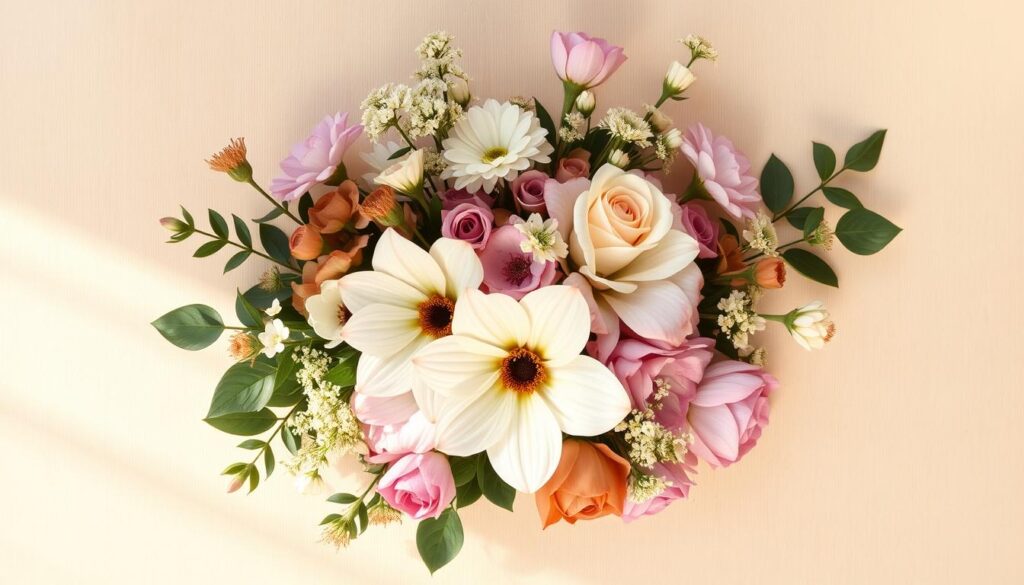
Try using different shapes and textures in your designs. Mix different types of flowers, from light and delicate to big and strong. This adds interest. Mixing smooth petals and rough leaves makes it look deeper. For example, roses with eucalyptus leaves catch the eye and add complexity.
Layering Flowers to Add Dimension
Layering flowers makes arrangements look deeper. Start with greenery at the bottom. Then, add main flowers in key spots. Use smaller flowers to fill in spaces. Each layer should be visible, making the arrangement look full. This method makes your designs look natural and flowing.
Color Palette Choices
Color theory is key in DIY floral design. Using color palettes right can make your arrangements look amazing. You might want a bold look or a gentle one. The right colors are important. Simple flower arranging techniques help pick the best palette.
Monochromatic Schemes
Monochromatic schemes use one color in many shades. This makes a look that’s both classy and together. It’s great for simple designs. A single color, in different shades, adds depth. It does this without being too much.
Analogous Color Combinations
Analogous color combinations use colors that are next to each other on the color wheel. They look good together and are easy on the eyes. With these colors, you can make a peaceful and pretty arrangement. It works well with many flower and leaf types.
Complementary and Near-Complementary Palettes
Want something that really stands out? Try complementary or near-complementary palettes. Complementary colors are opposite each other on the wheel. They contrast strongly. Near-complementary colors have a bit less contrast but still look lively. These choices make your main flowers pop. Your DIY floral design ideas will shine.
Caring for Your Floral Arrangements
To make your floral arrangements last longer, follow this step-by-step flower arranging guide. It will help keep your flowers looking fresh and lovely.
Maximizing Vase Life
First, pick fresh and healthy flowers. Cut the stems at a 45-degree angle for better water absorption. Also, remove leaves that might sit in water to stop bacteria from growing.
Using Flower Food
Flower food gives your flowers the nutrients they need. Mix it with water as the directions say. This keeps your flowers bright and extends their life. Don’t forget to regularly add flower food, as suggested in our step-by-step flower arranging guide.
Regular Water Changes and Stem Maintenance
Change the water every two to three days to keep your flowers fresh. Also, trim the stems a bit during each water change. This removes any bad parts and helps the flowers drink water better. This tip is key in our step-by-step flower arranging guide for keeping flowers beautiful longer.
Conclusion
This guide helps you start with flower arranging. It covers finding your muse and picking vessels. Plus, it looks at different flowers and color palettes. This way, you learn to make beautiful floral displays. These skills are great for fun or events. They add joy and beauty everywhere.
Knowing how to structure your flower arrangements is key. It boosts your confidence. Using things like floral tape and chicken wire lets you try new styles. This way, you create balanced and deep arrangements.
Choosing the right colors is very important. Colors set the mood for your flower arrangements. You can pick from single colors to mix-matched schemes. The right mix makes your flowers look like art. Also, keeping your flowers fresh is important. This means they will look good for a long time.
With these tips, you’re ready to be great at flower arranging. We hope you feel inspired to get creative. And to add nature’s beauty to your home and events.