
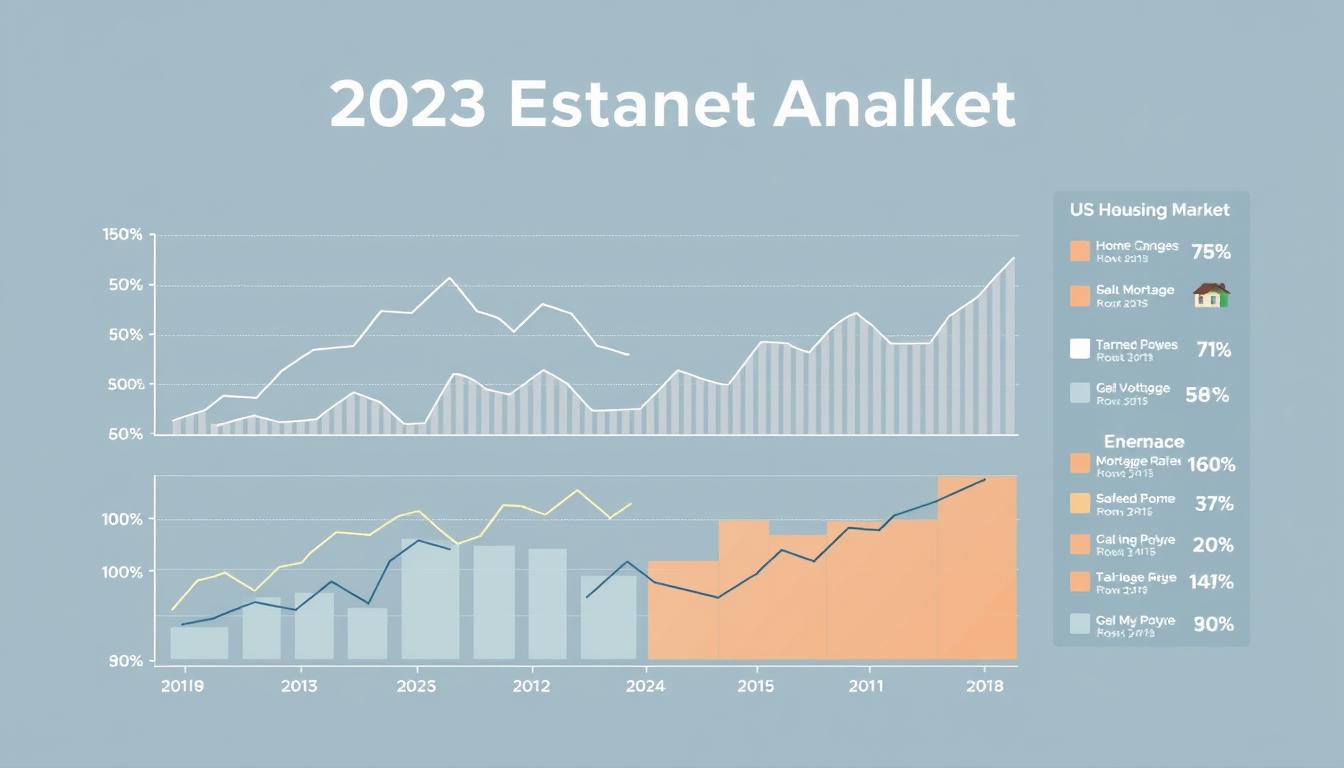
The 2023 US real estate market is seeing big changes. These changes come from different economic factors, what buyers want, and how the market moves. This yearly report looks at important trends in the real estate market.
We’re in a year full of economic ups and downs, differences in different places, and changing mortgage rates. Knowing about these trends is helpful for people wanting to buy, sell, or invest in property.
Key Takeaways
- Economic shifts are influencing purchasing behaviors in the real estate market.
- Mortgage rates are destabilizing, causing ripple effects across housing markets.
- Regional disparities continue to define real estate market trends.
- Migration patterns play a critical role in shaping local housing markets.
- Inflation and economic policies are directly impacting housing affordability.
Current Market Conditions and Economic Factors
It’s important to know the current market conditions to understand the US real estate market in 2023. Factors like housing costs, mortgage rates, and inflation help us see things more clearly.
Housing Affordability Index
The Housing Affordability Index (HAI) shows how easy it is for a typical family to buy a home. It looks at home prices, what families earn, and mortgage rates. This tells us about the challenges and chances to own a home. Also, the index shows how the economy affects different areas.
Mortgage Rate Trends
Mortgage rate trends change how people decide to buy homes. Rates have been going up and down lately. This is because of economic actions and how the market responds.
Knowing about these trends is key for potential homebuyers. When loan costs change, it either makes it easier or harder for people to buy houses.
Impact of Inflation
Inflation changes the game in real estate. As the cost of things goes up, so do home prices. This makes it tougher for buyers to get into the market. Also, inflation’s effect on real estate can make home prices go up and down. This challenges both buyers and sellers to keep homes affordable and keep their value.
| Economic Factor | Influence on Real Estate |
|---|---|
| Housing Affordability Index | Reflects barriers and opportunities in property acquisition |
| Mortgage Rate Trends | Influences homebuyer behavior and loan affordability |
| Impact of Inflation | Affects purchasing power and property values |
Residential Real Estate Stats: Existing, New and Pending Home Sales
The 2023 real estate market shows different trends. It looks at residential real estate stats like existing and new home sales, plus pending ones. These stats help us understand how the market changes due to the economy and where it’s happening.
Existing Home Sales: In some places, more existing homes are being sold now. This is happening in areas that are doing well economically. More people want to buy houses, even though prices and interest rates change a lot.
New Home Sales: New home sales are staying strong, even when money matters are uncertain. Some areas are seeing a lot of growth because there are more jobs and building going on. Builders are trying hard to keep up with these needs, even though materials and workers are expensive.
Pending Home Sales: Pending home sales tell us what might happen later in the housing market. The number of these sales contracts shows us that people might buy more houses soon. This is because they feel more sure about spending their money.
Here’s a table with the main residential real estate stats for the first and second quarters of 2023:
| Metric | Q1 2023 | Q2 2023 |
|---|---|---|
| Existing Home Sales | 5.1 million | 5.3 million |
| New Home Sales | 0.76 million | 0.78 million |
| Pending Home Sales | 1.4 million | 1.45 million |
By looking at these numbers, people who are interested can better understand how the housing market is changing. This makes them more ready to make smart choices.
Regional Market Performance Overview
The U.S. real estate sector shows different trends in various places. The Midwest real estate market is growing steadily. In contrast, the Northeast, South, and West see ups and downs. These trends help investors and homeowners make smart choices based on where they are.
Midwest Trends
Midwest’s real estate market is on the rise. Affordable homes and good jobs help this area do well. Cities like Chicago and Indianapolis stand out, giving buyers and investors a sense of security.
Northeast Trends
The Northeast’s real estate scene is more unpredictable. Big cities like New York City and Boston have high demand and prices. But, the market also cools down sometimes, making it a unique place for housing.
South Trends
The South’s real estate market is booming. More people and jobs are coming to states like Texas and Florida. This makes the housing market there very competitive and fast-changing.
West Trends
The West has a mix of booming areas and affordability problems. Places like San Francisco and Seattle have high housing costs because of the tech industry. But, finding affordable homes is tough, showing the challenges in this market.
Top Markets to Watch in 2023
Looking into the top real estate markets 2023, various places are shining bright. They stand out thanks to strong growth and recovery. The Sunbelt region is leading, with its great economy and lifestyle choices.
The Dallas/Fort Worth area is catching everyone’s eyes. It has many jobs and living there is affordable. It’s a top spot for buyers and investors.
Florida is also making a big comeback. Cities like Miami, Tampa, and Orlando are growing fast. Good tax rules and more people working from home help a lot.
Plus, other places in the Sunbelt are getting noticed. Phoenix, Charlotte, and Austin offer good home prices and lots of new houses. They have nice weather, more jobs, and living there costs less. These cities are great for real estate in 2023.
- Dallas/Fort Worth: Strong job market and affordable living
- Florida Cities: Miami, Tampa, Orlando – tax benefits and remote work surge
- Emerging Markets: Phoenix, Charlotte, Austin – new constructions and lower costs
The trends show 2023 will change the real estate world. The Sunbelt is leading this change. For investors and buyers, knowing what makes these areas great is key.
Home Price Trends and Forecasts
The cost of homes has changed a lot recently, with many things affecting the market. We will look closely at home price trends. This gives key info on what might happen next with home prices.
National Home Price Growth
Overall, the housing market is strong with steady price increases. This growth comes from not enough homes for sale, lots of buyers, and good economic health. Forecasts say home prices will keep going up, but not as fast as before. Buyers and investors need to watch these trends closely to make smart money decisions.
Regional Price Disparities
While we look at the whole country for home prices, different areas can vary a lot. For example, the West Coast has seen big price jumps partly because of tech jobs, unlike the Midwest, where prices go up slowly. It’s important for buyers and investors to know these differences to plan better. Future forecasts show these ups and downs will keep happening, due to local economies, people moving, and area rules.
New Construction and Builder Sentiment
In 2023, new building styles have really changed. This change is because of different economic factors and what people want now. Builders are now focusing on making buildings that are good for the planet and have new tech features.
Reports in the real estate world tell us that builders feel good about the future. This good feeling is important. It shows they’re ready to start new projects, even if things might get tough.
Even with the problems of high prices and not enough workers, builders keep going strong. The table below shows how confident builders feel this year compared to last year. It shows how high prices and worker shortages are changing how we build.
| Year | Builder Confidence Index | Main Economic Factor |
|---|---|---|
| 2022 | 65 | Labor Shortages |
| 2023 | 72 | Inflation Costs |
Builders being hopeful means we might get more houses soon. This could make finding a house easier and maybe cheaper. Watching these building trends helps people in real estate understand the market better and make smarter choices.
Factors Influencing Inventory Levels
The amount of homes for sale in real estate is very important. It shapes the market. The lock-in effect makes homeowners keep their homes. They got good mortgage rates before and don’t want to sell. Also, some places in the country have more homes for sale than others. This changes from one area to another.
The Lock-In Effect
The lock-in effect is when homeowners don’t want to sell their homes. They got low mortgage rates before. So, they don’t like the new, higher rates. This makes fewer homes available for sale. It can make home prices go up.
Regional Variations in Inventory
Regional inventory variations show that not all places have the same number of homes for sale. For example, places near the ocean may have fewer homes for sale than places in the middle of the country. This is because more people want to live in coastal areas. Understanding these differences helps us know what might happen in the real estate market later.
| Region | Inventory Level | Factors |
|---|---|---|
| West Coast | Low | High demand, urban development |
| Midwest | Moderate | Balanced demand and supply |
| South | Variable | Economic growth, new constructions |
| Northeast | Low to Moderate | High property taxes, aging housing stock |
Real Estate Market Trends in the Sunbelt Region
The Sunbelt region is now a key area in US real estate. Dallas/Fort Worth and Florida are very active markets. Investors and homebuyers need to watch these trends closely.
Dallas/Fort Worth
The Dallas/Fort Worth area’s property values are going up. This is because of more jobs and people moving there. The area’s varied economy attracts businesses and people alike.
Texas continues to attract significant migration due to its business-friendly environment and high quality of life.
Florida’s Comeback
Florida’s real estate market is becoming popular again. Miami and Orlando are growing fast. They offer good tax policies and warm weather, attracting many people. This comeback is shaping the real estate scene nationally.
Movers and Shakers
New hotspots are emerging in the Sunbelt region. Austin, Texas, and Tampa, Florida, are growing fast. People are watching these areas for good investment chances.
Foreclosure Rates and Homeowner Equity
New stats show changes in foreclosure rates and how much homeowners own of their houses. These numbers help us understand the economy better. They also show where money problems might be.
Recent Foreclosure Data
Recent info gives us a mixed view of foreclosures. In some places, they’re going up. In others, they’re not. This tells us how the housing market is doing.
Home Equity Trends
Homeowners are generally doing better, thanks to higher house prices. But, it’s not the same everywhere. Knowing about these trends helps us see who might be at risk.
Impact of Trade Policies and Economic Uncertainty
Trade policies and economic uncertainty shape the real estate market a lot. The U.S. is dealing with complex trade deals and tariffs. These are changing economies at local and national levels.
Investors are watching closely. They see how trade policies affect their money plans. Economic uncertainty makes them careful with their real estate investments. They worry about rising costs. This could make building and buying homes more expensive.
Economic uncertainty can make people unsure about the market. This leads to fewer real estate deals. Buyers and sellers might wait for a more stable economy before making decisions.
Trade policies and real estate are closely linked. Changes in trade can make building materials cost more and cause delays. This changes the housing market. Real estate needs good planning to avoid risks and find new chances.
For those in real estate, understanding the effects of trade policies and uncertainty is key. It helps them succeed in a changing market.
| Factor | Potential Impact |
|---|---|
| Trade Tariffs | Increased construction costs |
| Economic Uncertainty | Lower market confidence |
| Supply Chain Disruptions | Delayed construction projects |
Mortgage Rate Projections and Buyer/Seller Behavior
Knowing how mortgage rates might change is important. It helps predict how buyers and sellers will act. As mortgage rates go up or down, it shows in the behavior of both groups in the real estate market.
Buyer Reaction to Changing Rates
When mortgage rates go up, buyers usually wait before buying. This makes the market slow down. But if rates might go down, buyers get excited. This makes them want to buy more since it’s cheaper.
Seller Strategies in a High-Rate Environment
Sellers have to adjust when rates are high. They might offer deals to attract buyers. Like lowering the interest or helping with closing costs. They can also make their property better to keep the price up despite high rates.
The mix of mortgage rate changes, how buyers react, and seller plans shapes the market. Knowing how to work with these changes is crucial for success.
How Migration Trends Are Shaping the Housing Market
Population shifts change how the housing market works. In recent years, many people have moved from cities to the suburbs or countryside. They do this for jobs they can do from home, to have more room, and find cheaper homes.

The COVID-19 pandemic made this trend stronger. Now, more people want to live where it’s not so crowded. States like Texas, Florida, and Arizona are getting more people. At the same time, New York and California are losing residents.
This movement of people is making house prices go up in places with more people coming in. Builders and those investing in homes are paying attention. They’re starting new projects in these popular areas to meet demand.
Looking at these trends helps us see how the housing market is changing. These changes are important. They affect jobs, local businesses, and even things like roads and schools.
It’s very important for everyone involved – like the government and people selling houses – to understand these changes. This way, they can make smart choices. As what people want changes, the housing market needs to be ready to change too.
Conclusion
The 2023 real estate market is active but tough. The national median resale home price went up by 1.3%, reaching $422,800. Also, there was a small increase in existing-home sales by 0.8% in May. But the builder sentiment is down, hitting 32 in June on the NAHB/Wells Fargo Index. This led to builders cutting prices, a peak not seen since 2022.
The market is complex, showing some growth and big gains in homeowner equity. Equity is now over $34.7 trillion. This situation offers both chances and hurdles. And even though foreclosures are rare, different areas and the changing economy create a detailed picture.
Knowing about market trends is key for smart real estate choices. For more info, this comprehensive analysis has deeper insights and forecasts. In short, being aware and flexible is vital for anyone in real estate in 2023. Understanding data and trends helps in making wise, strategic decisions in a shifting market.